


Biochar Europe (BCE) has submitted a letter to the Nutrient Management Institute (NMI) in response to the 2nd interim report concerning the review of the EU Fertilising Products Regulation (FPR),specifically regarding the possible inclusion of sewage sludge as a feed stock for pyrolysis under CMC 14.
The current NMI assessment concludes that sewage sludge biochar should not yet be authorized due to unresolved questions concerning PFAS standards and analytical methodologies. We consider this conclusion scientifically unjustified in light of the existing evidence demonstrating the effective destruction of PFAS under the pyrolysis conditions proposed by Biochar Europe.
The following letter was sent to Laura van Scholl at the Nutrient Management Institute together with supporting scientific studies and previous submissions already provided during the consultation process.
The 2025 BCE Position Paper on Sewage Sludge Biochar concludes that biochar derived from sewage sludge should be classified under the Component Material Category 14, with a thermochemical conversion process requirement that should occur under oxygen-limiting conditions at temperatures >600°C for a minimum duration >5 min. Such additional process conditions would secure the safety of biochar from sewage sludge use in agriculture as long as PAH levels are monitored and controlled. Pyrolysis technology for the production of biochar from sewage sludge is widely available on the commercial market. The carbonization of this category of feedstocks can ensure product safety by minimizing and eliminating organic contaminants by advanced treatment and clearly defined process parameters.
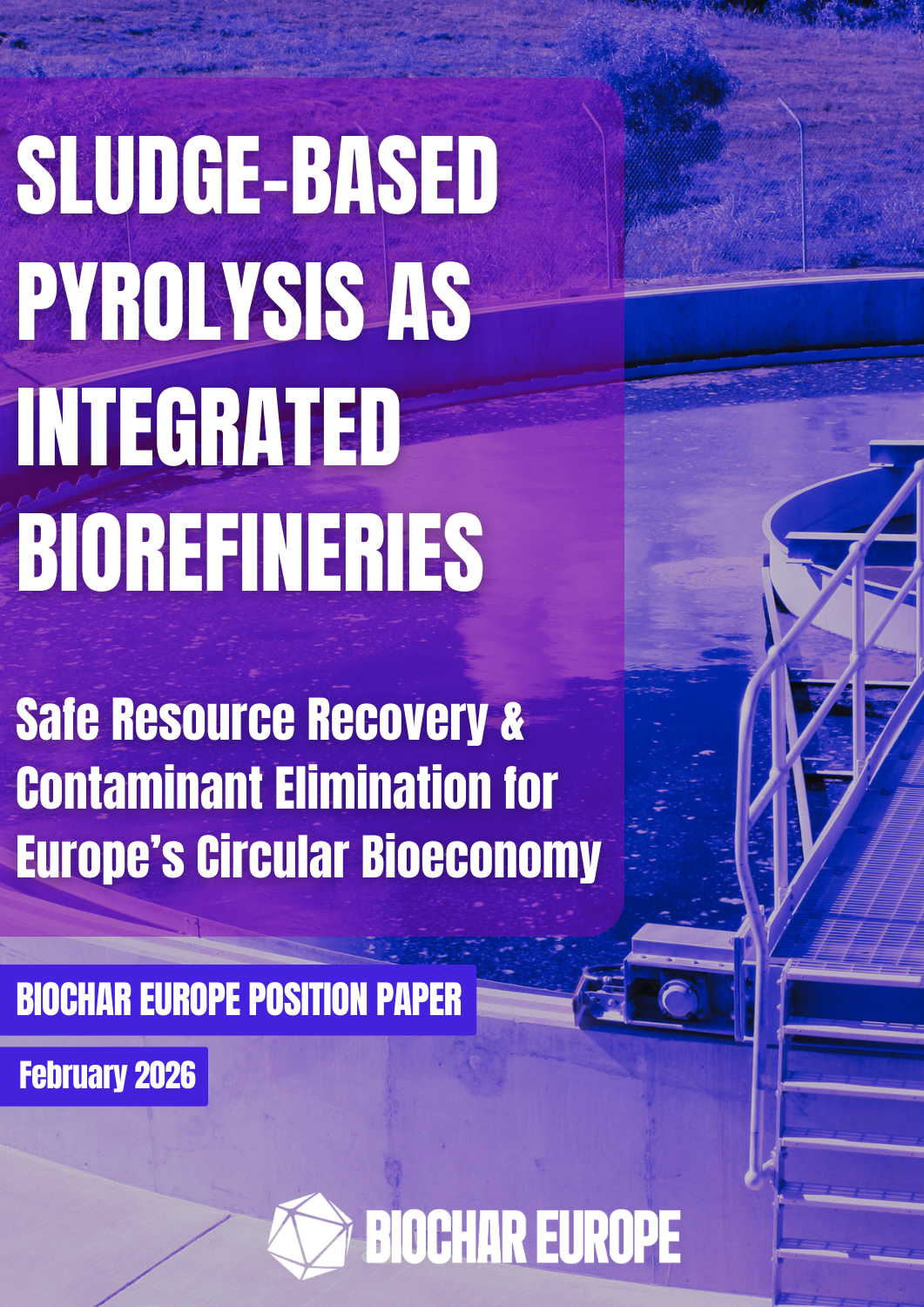
Excerpt
This Biochar Europe (BCE) position paper examines whether thermochemical conversion can provide a safe and regulated pathway for using sewage sludge-derived biochar under the EU Fertilising Products Regulation.
Download the copy
The technology holds the potential to substantially lower wastewater management expenses and transform wastewater treatment into a resource for producing a phosphorus-rich fertilising product. Currently, a large part of the sewage sludge produced is landfilled, causing an annual 4.1 Mt CH emissions. Further, the transportation of raw sludge entails logistical challenges that can be bypassed with the local production of biochar, annexing a pyrolysis plant directly to wastewater treatment facilities. Pyrolysis can transform the carbon contained in the feedstock into a highly stable form, qualifying for permanent carbon removals.
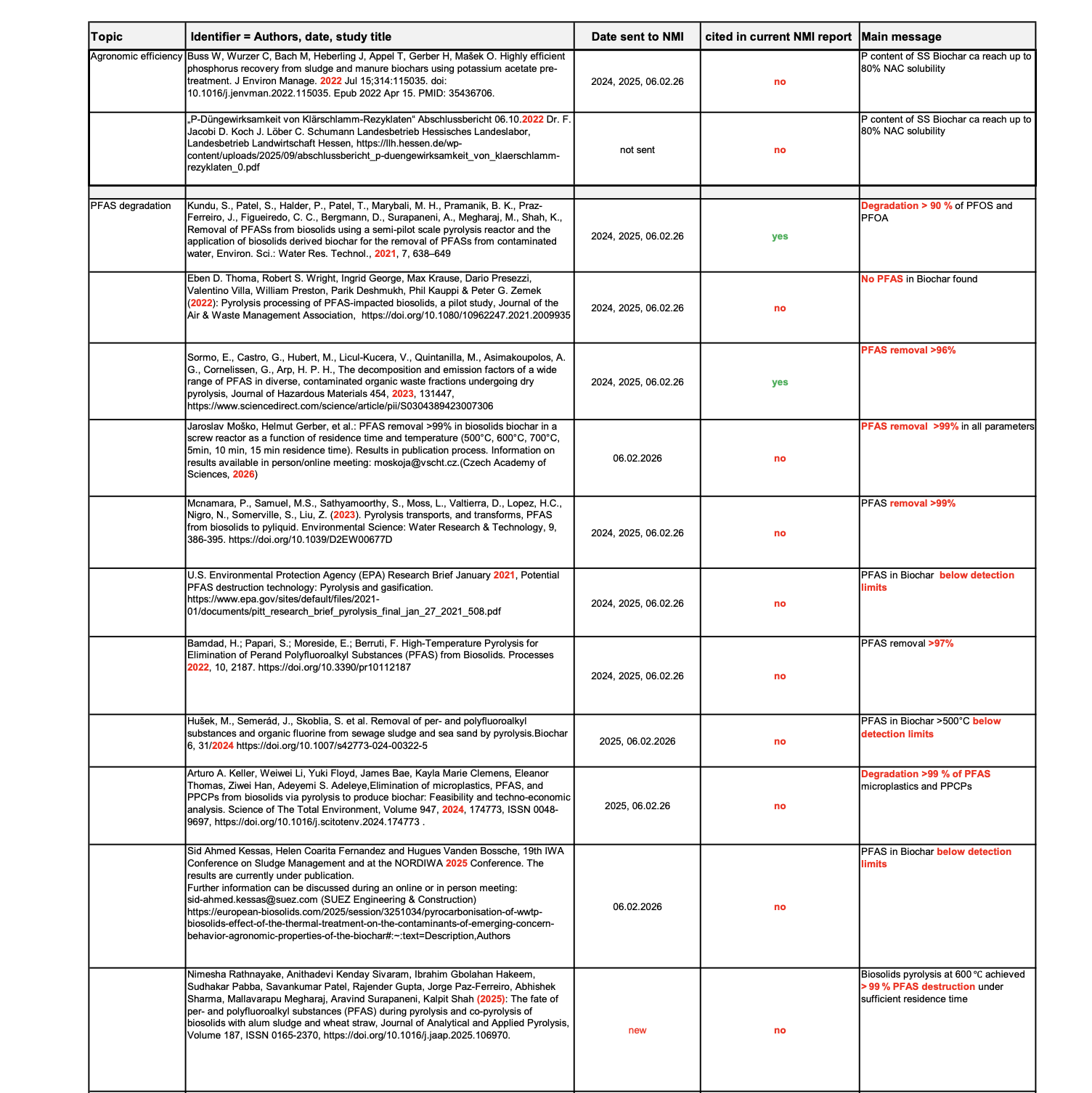
This document brings together scientific studies and technical evidence submitted to the Nutrient Management Institute (NMI) concerning sewage sludge biochar under the EU Fertilising Products Regulation, including findings on PFAS degradation, phosphorus recovery, contaminant removal, and full-scale pyrocarbonisation data.
View Supporting Scientific EvidenceThis document brings together scientific studies and technical evidence submitted to the Nutrient Management Institute (NMI) concerning sewage sludge biochar under the EU Fertilising Products Regulation, including findings on PFAS degradation, phosphorus recovery, contaminant removal, and full-scale pyrocarbonisation data.
View Supporting Scientific Evidence
About